
Maha Kumbh Mela: ‘Dharmanomics’ In Action
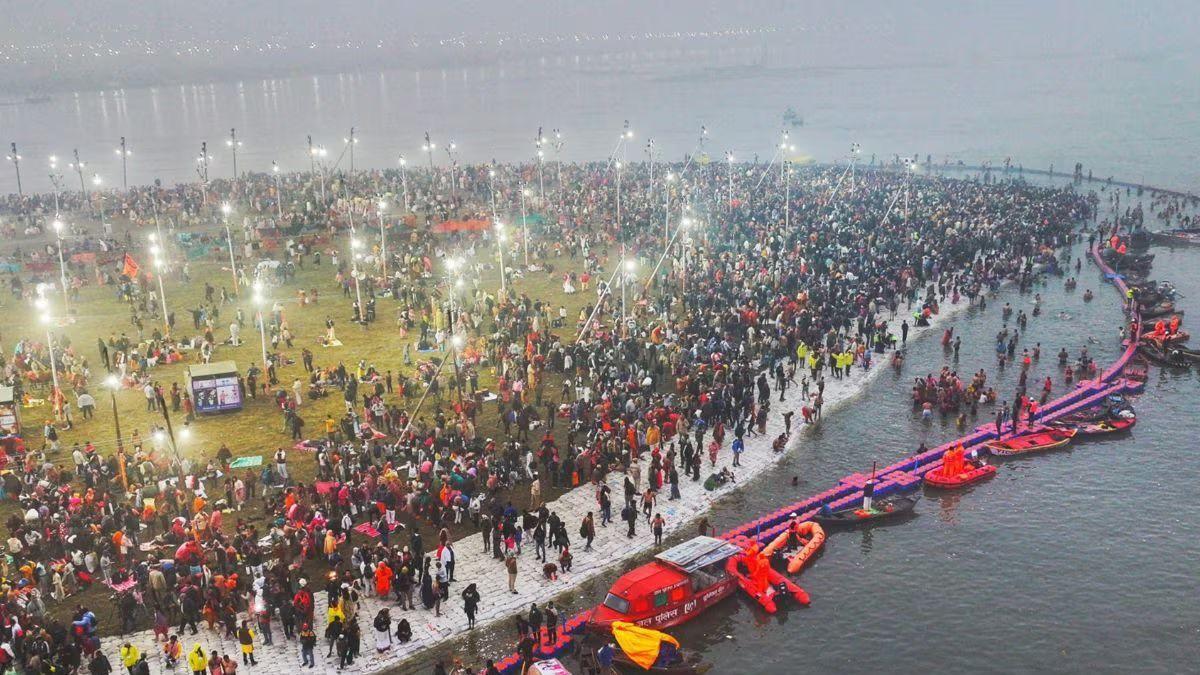
The Maha Kumbh this year is truly special. With more than 400 million people descending onto Prayagraj for this spectacle over the next two months, its significance is further enhanced by the grand arrangements under the Uttar Pradesh government to create such a marvellous atmosphere.
While many renowned Indic scholars have reiterated the religious significance and importance of the event, one question that people should ponder on is the economic contribution of the massive event not only to Uttar Pradesh but the rest of Bharat as well. The greatest confluence of culture and economics driven by the dharmic way of life in one place is taking place in these two months.
These numbers tell us a striking story – this year, it is bigger and better. The total budget allocated for the event is estimated to be about Rs 7,200 crore ($1.3 billion), which includes Rs 5,100 crore from the state government and a grant of Rs 2,100 crore from the central government.
For instance, a separate district called ‘Mahakumbhnagar’ has been created, and it has the capacity and infrastructure that could accommodate an estimated 40 crore pilgrims in a much bigger 40 sq km venue in 2025. Other key infrastructure parameters include 1.5 lakh toilets, 10,000 changing rooms for pilgrims, 7,500 buses and at least 3,000 special trains.
Rs 400 crore has been allocated for energy infrastructure alongside a plethora of technological advancements to boost the consumer experience at the event. These include AI-generated systems, drones and other technological improvements.
For a common audience, what are the most important economic and policy takeaways from this event?
First, it’s important to recognise that 400 million people are arriving at a particular location over a two-month period without any incentive or favour from the state or external entities. In turn, what it means is that all of these 400 million people will be making economic choices – for food, accommodation, travel, tourism, all the religious items required for their darshan, which includes flowers, petals, agarbattis among others, based exclusively on their dharmic ‘way of life’. No one is thinking or bothering about the stock market or RBI (Reserve Bank of India) interest rates at this moment, are they? Most of the discretionary expenditure during this time is driven by people’s pursuit of their dharmic ‘way of life’.
While I have been arguing that this has been the norm throughout the year in society, as culturally intertwined as we are, the Maha Kumbh brings this into stark perspective for us to absorb and contemplate in equal measure.
Second, while I have shown all the economic investments made, there are many positive direct and indirect outcomes out of this entire exercise for the local economy. Direct effects are what you see as a direct correlation to the event.
For instance, it’s estimated that the revenues generated from the entire event could be closer to Rs 2.5 lakh crore in 2025. This was around Rs 1,200 crore in 2013 and the CII (Confederation of Indian Industry) estimated it at about Rs 1.2 lakh crores in the 2019 Kumbh Mela. This estimate of Rs 2.5 lakh crore is equivalent to almost 10 per cent of the Uttar Pradesh SGDP, which is at almost Rs 25.48 lakh crore for 2023-2024 as per the latest estimates! Given the fact that direct revenue estimates are concentrated for an event, which is for about two months, it tells you the scale of the impact on the GDP numbers for the financial year in UP alone.
Furthermore, in 2019, it had provided employment to almost six lakh workers, as per the same CII report. This is clearly bound to increase this year and over 10 lakh job opportunities (part-time and full-time) are expected to be created. These were estimated to be direct revenue multipliers in terms of tourism, infrastructure and discretionary spending.
Third, there is a substantial amount of indirect economies of scale created due to such a massive event. These are what I call ‘ripple effects’ of the direct economic interventions mentioned before. For example, what happens to the large tourism infrastructure in Prayagraj after the kumbh? What happens to the 1,249 km of pipelines to feed over 200 water ATMs and 85 water booths created by the Jal Nigam? Most, if not all of the infrastructure that has been built during the kumbh, will remain in use for other activities and purposes for many years to come.
Last, the massive organisation of the kumbh creates a major incentive for politicians and bureaucrats to accelerate their pace and efficiency of infrastructure and economic development. Given the vast scale and urgent needs of the event within a specific time period, there is social and political accountability for the organisation for such a large event. In essence, this entire dharmic mega event catalyses the economic activity in that particular city in a time-bound and efficient manner not seen during normal times.
In retrospect, the massive benefits of economies of scale of the Maha Kumbh is fully evident in terms of economic growth, employment and other sectoral infrastructural development needs. This is probably the biggest example of the dharmic way of life driving economic outcomes in a time-bound manner and at such a large scale.
While everyone embraces the spiritual and cultural marvel of the Maha Kumbh, one needs to also observe and get mesmerised by the potential economic benefits of such an event.